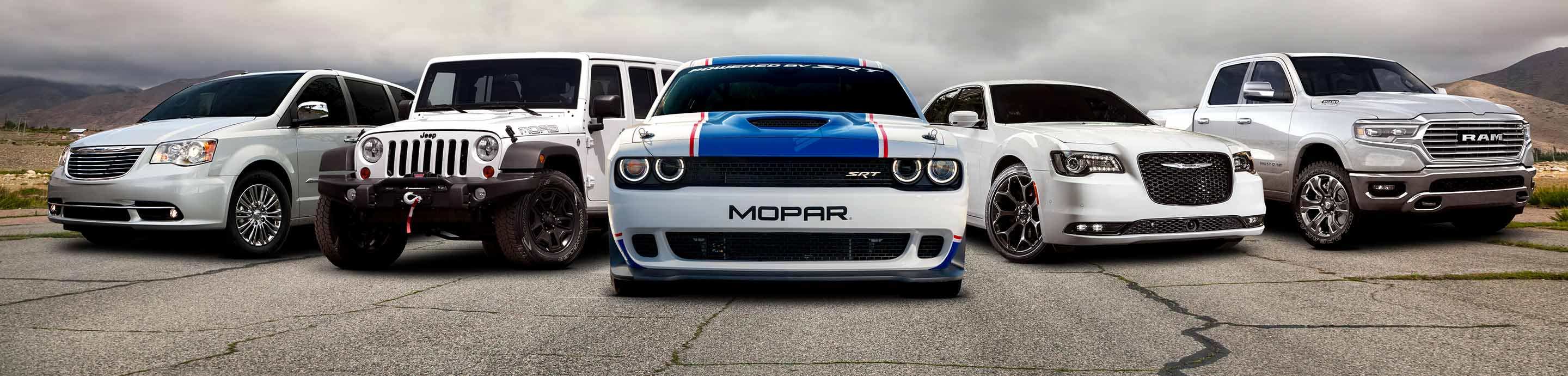

Diesel engines used by Ram, Chrysler, Dodge, Jeep, and DeSoto
Cummins • Perkins • VM V6 • VM four-cylinders
![Image]()
The first diesel engines used by Chrysler Corporation cars were Perkins models, used in trucks in the United States and worldwide. Chrysler International built cars with Perkins engines in Antwerp and then Rotterdam from 1956 to 1962. AMC Ramblers were fitted with similar Perkins engines; and many Chrysler Corporation cars were converted to diesels by Hunter NV, Perkins' Belgium distributor.
After Dodge bought Commer, they would use Perkins diesel engines in their British-built trucks. (Perkins was purchased by Caterpillar in 1998 but still makes engines under its own name.) Chrysler opened their own diesel engine plant in 1963 in Darlington, UK, but sold it to Cummins in 1964.
Starting in 1978, Dodge packed a Mitsubishi diesel in its D100 pickups and Power Wagons. The engine was the Mitsubishi 6DR5, 3950 cc, with 105 hp at 3500 rpm; it was virtually identical to the Land Cruiser diesel engine of the time. The year this engine was dropped is unclear.
Cummins engines were first used in Dodge Rams in 1989; they were surprisingly popular from the start and may have single-handedly saved the company's heavy-duty pickup line. These "B" engines were originally rated at 160 hp, with torque of 400 lb-ft at 1,700 rpm; the torque has been doubled since then.
Chrysler has used numerous VM Motori diesels in vehicles sold in Europe, as well as Jeeps sold in numerous regions. Chrysler also briefly used a Mercedes 3-liter V6 diesel, most notably in a limited edition Jeep Liberty, and in rebadged Freightliner/Mercedes Sprinter vans.
1999-2001 Chrysler and Jeep diesel engines
Chrysler had new VM Motori diesel engines for export markets in 1999. The 2.5 was for minivans and Jeeps, the 1.9 was for cars, and the 3.1 was for Jeeps; the smaller engines were direct-injected four-valve turbodiesels, released in 2001 (1.9) and 1999 (2.5), while the 3.1 liter was a five-cylinder. All had better performance, efficiency, and noise levels than the earlier models, and met Stage III emissions rules. They all had:
The engines were:
2006 Chrysler and Jeep diesel engines in Europe (from Chrysler releases provided by Doug Hetrick)
The Jeep Grand Cherokee, Jeep Commander, and Chrysler 300C had an optional new 3-liter Mercedes common-rail V6 diesel, with 2,000+ bar Bosch fuel injection, a variable geometry turbocharger, and four valves per cylinder; it met Euro 4 standards, using a particulate filter on the 300C. Maximum power was 160 kW (218 hp DIN) and peak torque was 510 N.m (376
lb.-ft.) at 1800 rpm. The engine was mated to a Mercedes W5A580 automatic transmission, and weighed 208 kg / 459 lb. Fuel consumption with the 300C was 8.1 L/100
km, EU standard for sedan (8.3 for touring).
The PT Cruiser used a variable geometry turbo, measuring 2.2 liters, generating 110 kW (150 hp) with the same gas mileage as the previous, less powerful unit (6.7 L/100 km,
combined cycle). Maximum torque of 300 Nm (221 lb.-ft) was produced from 1600
rpm to 3000 rpm. Matched to a five-speed manual transmission, this engine
reduced the 0-to-100 km/h acceleration time from 12.1 seconds in the
previous model to 10.8 seconds (estimated). The engine was an advanced
common-rail design, Euro 4 compliant, with less high-frequency combustion noise
than the previous diesel engine.
Horsepower ratings may vary from country to country and year to year. Lars noted that the 2005 2.5 VM engine is also sold with 120 hp ("negative chip tuning").
1987-2005 Chrysler and Jeep diesel engines (thanks, Doug Hetrick)
* 1992-1995 in Model ES with timing gears;
1996-98 in Model GS with chains (thanks, Doug Hetrick);
1999-2000 in Model GS with timing gears. "The gear model started around Sept 1997. The only way to see which model is to look at the injection pump. The chain model has Bosch 0 460 404 975 while the gear model has Bosch 0 460 404 963."
Also see these diesel pages at allpar:
Home •
Engines •
Reviews •
Chrysler 1904-2018 •
Upcoming •
Trucks •
Cars
Spread the word via <!--Tweet or--> Facebook!
We make no guarantees regarding validity or accuracy of information, predictions, or advice - .
Copyright © VerticalScope Inc. All rights reserved. Dodge, Jeep, Chrysler, Ram, and Mopar are trademarks of Fiat Chrysler Automobiles.
Cummins • Perkins • VM V6 • VM four-cylinders
After Dodge bought Commer, they would use Perkins diesel engines in their British-built trucks. (Perkins was purchased by Caterpillar in 1998 but still makes engines under its own name.) Chrysler opened their own diesel engine plant in 1963 in Darlington, UK, but sold it to Cummins in 1964.
Starting in 1978, Dodge packed a Mitsubishi diesel in its D100 pickups and Power Wagons. The engine was the Mitsubishi 6DR5, 3950 cc, with 105 hp at 3500 rpm; it was virtually identical to the Land Cruiser diesel engine of the time. The year this engine was dropped is unclear.
Cummins engines were first used in Dodge Rams in 1989; they were surprisingly popular from the start and may have single-handedly saved the company's heavy-duty pickup line. These "B" engines were originally rated at 160 hp, with torque of 400 lb-ft at 1,700 rpm; the torque has been doubled since then.
Chrysler has used numerous VM Motori diesels in vehicles sold in Europe, as well as Jeeps sold in numerous regions. Chrysler also briefly used a Mercedes 3-liter V6 diesel, most notably in a limited edition Jeep Liberty, and in rebadged Freightliner/Mercedes Sprinter vans.
1999-2001 Chrysler and Jeep diesel engines
Chrysler had new VM Motori diesel engines for export markets in 1999. The 2.5 was for minivans and Jeeps, the 1.9 was for cars, and the 3.1 was for Jeeps; the smaller engines were direct-injected four-valve turbodiesels, released in 2001 (1.9) and 1999 (2.5), while the 3.1 liter was a five-cylinder. All had better performance, efficiency, and noise levels than the earlier models, and met Stage III emissions rules. They all had:
- Common Rail Fuel Control (CR) with a high-pressure pump to achieve 1,500 bar injection pressures, for better spray atomization, maintained throughout the full engine speed range.
- Pilot injection - a fuel spray which precedes the main spray to initiate combustion, to reduce noise.
-
Four valve direct injection brought 15% better fuel efficiency than indirect injection. Direct injection is most efficient when the injector is centrally located, which is not possible in a two-valves-per-cylinder engine.
- Cooled EGR (optional) enhanced the emission-controlling benefits of conventional EGR systems.
- Swirl Control (optional) at the cylinder head intake matched the air motion in the combustion chamber with the needs of the engine, without sacrificing the amount of flow. One port was tangential for maximum flow, while the other was designed to induce swirl to air entering the combustion chamber, based on engine load and speed.
- A special NOx catalyst.
The engines were:
- The Detroit Diesel/VM Motori 3.1 litre on the 1999 Grand Cherokee; it had an electronic injection pump, and electronically-controlled, vacuum-actuated exhaust gas recirculation.
- The 1.9 liter from Detroit Diesel and FEV Engine Technology met EURO IV emissions standards, and featured centrally located fuel injectors, direct injection, four valves per cylinder, and electronic EGR.
- The VM Motori 2.5 liter diesel replaced the existing 2.5 litre diesel in the Voyager, Cherokee, and Grand Cherokee. It had balance shafts for reduced vibration. Gas mileage was 15% better than the older diesel, with more power, thanks to a variable geometry turbocharger (VGT), cooled exhaust gas recirculation (EGR) system, swirl control, and other new features.
| 1.8 Liter Detroit Diesel / FEV | 2.5 Liter Detroit Diesel / VM Motori | 3.1 Liter Detroit Diesel / VM Motori | |
| Manufactured: | Saltillo, Mexico | Cento, Italy | Cento, Italy |
| Projected Volume: | 25,000 - 30,000 a year | 20,000 a year | 13,000 a year |
| Mileage: | 5.3 l/100km (small cars); 5.7 litres/100km (mid-sized) | 15% more than older 2.5-litre diesel, with 10% increase in power | 30% better than the gasoline engine it replaces |
| Displacement: | 1,896cc | 2,499cc | 3,124cc |
| Power: | 86 kW/115 bhp w/intercooler, 67 kW/90 bhp w/o intercooler; 230 N-m/170 lb-ft w/intercooler, 179 N-m/132 lb-ft w/o intercooler | 104 kW/140 bhp; 320N-m/236 lb-ft | 104 Kw/140 bhp; 367 Nm/271 lb-ft |
| Transmission: | Five speed manual only | Five speed manual only | Four speed electronically controlled automatic |
The Jeep Grand Cherokee, Jeep Commander, and Chrysler 300C had an optional new 3-liter Mercedes common-rail V6 diesel, with 2,000+ bar Bosch fuel injection, a variable geometry turbocharger, and four valves per cylinder; it met Euro 4 standards, using a particulate filter on the 300C. Maximum power was 160 kW (218 hp DIN) and peak torque was 510 N.m (376
lb.-ft.) at 1800 rpm. The engine was mated to a Mercedes W5A580 automatic transmission, and weighed 208 kg / 459 lb. Fuel consumption with the 300C was 8.1 L/100
km, EU standard for sedan (8.3 for touring).
The PT Cruiser used a variable geometry turbo, measuring 2.2 liters, generating 110 kW (150 hp) with the same gas mileage as the previous, less powerful unit (6.7 L/100 km,
combined cycle). Maximum torque of 300 Nm (221 lb.-ft) was produced from 1600
rpm to 3000 rpm. Matched to a five-speed manual transmission, this engine
reduced the 0-to-100 km/h acceleration time from 12.1 seconds in the
previous model to 10.8 seconds (estimated). The engine was an advanced
common-rail design, Euro 4 compliant, with less high-frequency combustion noise
than the previous diesel engine.
Horsepower ratings may vary from country to country and year to year. Lars noted that the 2005 2.5 VM engine is also sold with 120 hp ("negative chip tuning").
1987-2005 Chrysler and Jeep diesel engines (thanks, Doug Hetrick)
| Years | Model | Engine | Trans. | HP (kW) | lb-ft (Nm) | C/R | mpg city / hway/ combined | Top Speed / 0-60 |
| 2003-2005 | PT Cruiser | Mercedes 2.2 | 5-speed | 121 (84) | 221 (300) | 18:1 | 26 / 42 / 34 | 114 mph / 12.1 sec |
| 2003-2005 | Voyager | VM Motori 2.5* | 5-speed | 143 (105) | 251 | 28.5 / 44 / 37 | 115 / 11.9 | |
| 2005 | Voyager | VM Motori 2.8 | 4-speed auto | 150 | 265 | 17.5:1 | 25 / 33 / 29 | 112 / 12.0 |
| 2005 | Grand Voyager | VM Motori 2.8 | 4 speed auto | 150 | 265 | 17.5:1 | 25 / 32 / 29 | 112 / 12.0 |
| 1987-1993 | Cherokee | Renault 2.1 | 85 | 115 | 26 / 32 / na | |||
| 1992-2001 | Voyager | VM 2.5* | 5 speed | 115 | 221 (300) | |||
| 1994-2001 | Cherokee / GC | VM 2.5 | 5 speed | 115 | 221 (300) | |||
| 2003-2005 | Cherokee Sport | VM 2.5 | 5 speed | 141 | 251 | 17.5:1 | 24 / 38 / 31 | na / 13.5 |
| 2004-05 | Cherokee 4x4 | VM 2.8 VGT | 5 speed auto | 148 | 266 | 17.5:1 | 22/34/28.5 | na / 12.6 |
| 2002-04 | Grand Cherokee | MB 2.7 I-5 | 5 speed auto | 161 | 295 | 18:1 | 23/35/29 | na / 11.2 |
| 1999-2001 | Jeeps | DD/VM 3.1 | 4 speed auto | 140 (104) | 271 (367) | 11,7 l/100km | 170 km/h | |
| 1978-? | Dodge trucks | Mitsubishi 3.9 | A-727 auto | 105 | 170? | 20+ highway? |
* 1992-1995 in Model ES with timing gears;
1996-98 in Model GS with chains (thanks, Doug Hetrick);
1999-2000 in Model GS with timing gears. "The gear model started around Sept 1997. The only way to see which model is to look at the injection pump. The chain model has Bosch 0 460 404 975 while the gear model has Bosch 0 460 404 963."
Also see these diesel pages at allpar:
Home •
Engines •
Reviews •
Chrysler 1904-2018 •
Upcoming •
Trucks •
Cars
Spread the word via <!--Tweet or--> Facebook!
We make no guarantees regarding validity or accuracy of information, predictions, or advice - .
Copyright © VerticalScope Inc. All rights reserved. Dodge, Jeep, Chrysler, Ram, and Mopar are trademarks of Fiat Chrysler Automobiles.